Crypto is efficient onchain, but messy offchain.
For years, the dominant criticism of crypto was throughput. Compared with everyday payment systems, blockchains were seen as too slow and too constrained to break out of a narrow crypto-native circle. Bitcoin and Ethereum were routinely measured against Visa or Mastercard, with transaction-per-second limits that made mainstream payments feel out of reach. Nearly two decades after Bitcoin’s creation, that concern is becoming an afterthought. Bitcoin has settled into a store-of-value role, while Ethereum, supported by Layer 2 networks,has expanded effective throughput and pushed transaction costs down. Gas fees that once spiked during the height of DeFi activity are now far lower, and settling value onchain is no longer the primary constraint.
That shift is beginning to show up in how companies operate. Crypto payroll remains small relative to traditional salary systems, but adoption is accelerating. In 2023, around 3 percent of respondents reported receiving part of their salary in crypto. By 2024, that figure had risen to roughly 9.6 percent, driven largely by blockchain-native companies and DAOs using stablecoins for compensation. At the business level, crypto payroll adoption has grown from about 15 percent of companies in 2023 to more than 25 percent in 2025, signaling a gradual move from experimentation toward everyday financial use.
There is great news that Toku has selected @0xPolygon to launch a compliant, global stablecoin payroll for employers.
— Alex (@obchakevich_) January 20, 2026
If we look at the analytics, we can see that many interesting companies are already working on Polygon. For example, @rise_pay and @opolis.
In 2024, Rise… pic.twitter.com/aiPQqmJqJw
Where the Real Cost of Crypto Operations Comes From
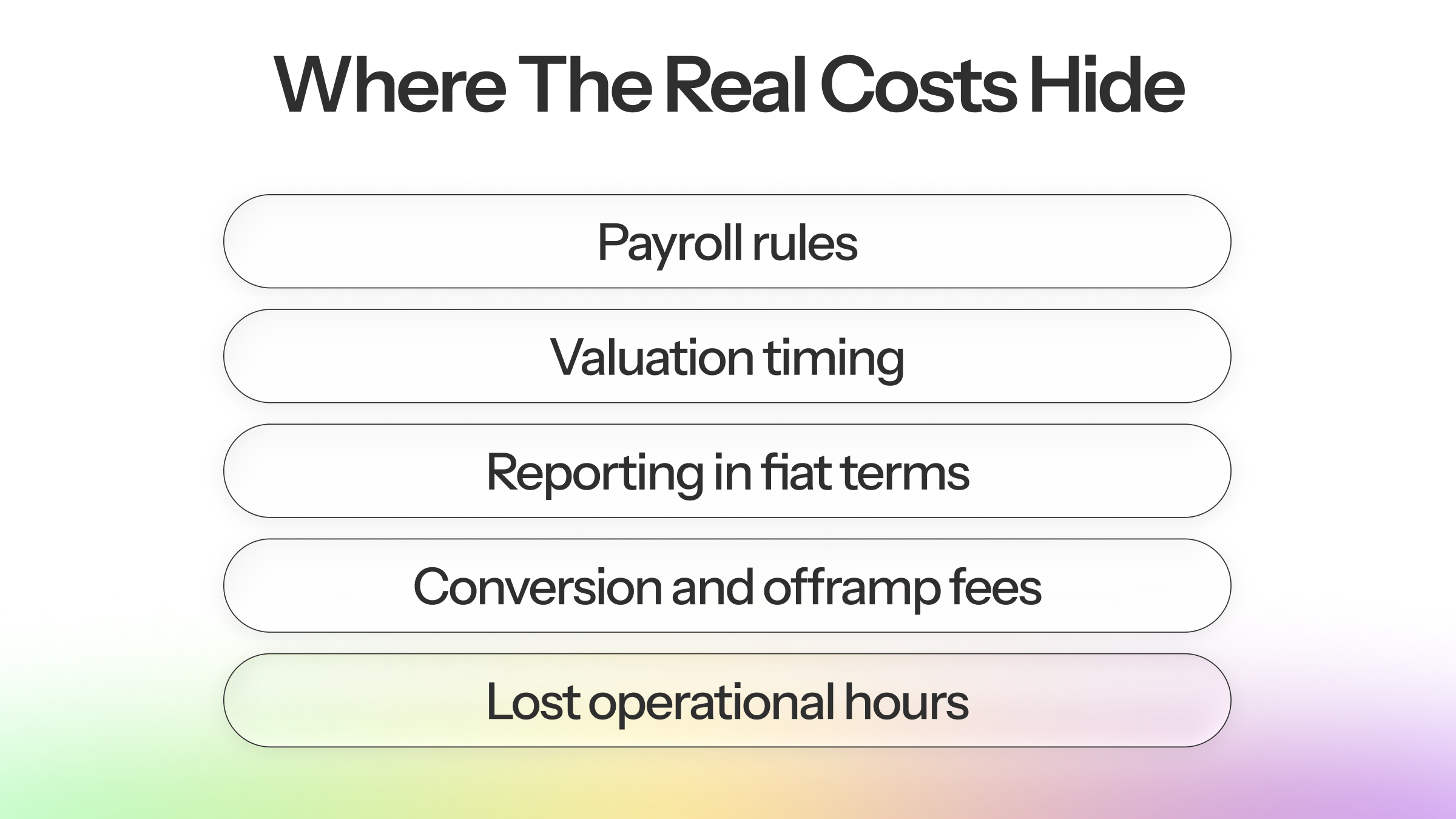
Volatility is often the first cost companies encounter when experimenting with crypto compensation. Price swings can materially change the value of a payment between the moment it is sent and the moment it is used, creating uncertainty for both employers and workers. In one 2021 labor court ruling, an employer was required to compensate an employee a second time in fiat after an initial salary payment was made in Bitcoin, because price fluctuations made it unclear whether the full wage had been delivered under local labor law.
Stablecoins reduce this exposure by anchoring compensation to a predictable unit of account, making crypto payments usable for everyday expenses and limiting short-term price risk. But volatility is only the first layer of friction, and it is often noticed by individuals before finance teams feel it. Freelancers, employees, and ambassadors or affiliates paid in a company’s native token regularly describe the transfer itself as the easiest part of the process. The difficulty begins afterward, when payments must be tracked, valued at the time of receipt, converted where necessary, and explained to accounting systems or tax authorities that do not recognize crypto as a standard input. What starts as a faster way to receive money often results in extra spreadsheets, manual reconciliation, and ad hoc rules to make the payment legible offchain.
For crypto-native companies, additional costs also appear inside the onchain workflow itself. Moving funds between networks, bridging stablecoins, rebalancing treasury positions, or swapping assets to meet operational needs all introduce gas fees and execution risk. Individually, these costs are often small. At scale, they become meaningful as they repeat across payroll cycles, treasury movements, and cross-chain activity. Even routine actions such as issuing a bonus, which follow established rules in fiat systems, can require additional valuation, documentation, and compliance checks when paid in crypto. The transfer itself may settle instantly onchain, but the operational work and incremental costs surrounding it continue long after, spreading across payroll, treasury, and reporting functions.
Treasury Management Is Cheap Until It Is Not
In the early stages, crypto treasury management often looks simple. Funds are visible onchain, transfers are fast, and moving capital between wallets feels flexible and inexpensive. For small teams, this setup works well enough. The hidden costs emerge once treasury activity has to reliably support payroll, bonuses, contractor payments, and conversions to fiat across multiple jurisdictions.
One source of friction is idle capital created by manual rebalancing. To avoid payment failures or delays, teams pre-position funds across multiple wallets, exchanges, and networks. These balances sit unused not because they are unnecessary, but because coordinating liquidity in real time is operationally risky. As a result, a meaningful share of the treasury can remain idle simply to ensure funds are available where and when they are needed.
Compliance introduces another recurring cost. Sanctions and regulatory restrictions can force treasury changes even when business activity remains unchanged. A common example is converting holdings from USDT to USDC to meet internal or external compliance requirements. Under normal market conditions, such swaps typically incur losses measured in tens of basis points once exchange spreads, trading fees, and execution timing are accounted for. Treasury actions such as rebalancing, swapping assets, or moving funds across chains also require careful tracking and valuation, adding reporting overhead that compounds as activity increases.
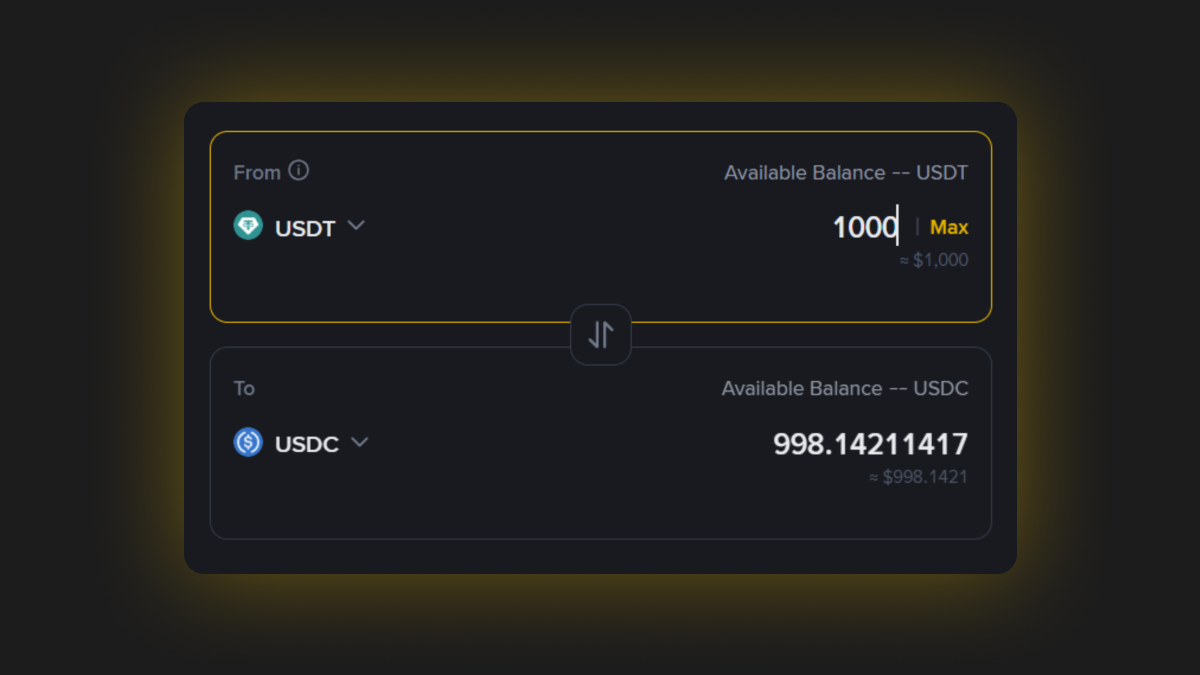
At scale: the spread can amount to thousands of dollars
Crypto Payroll and the Compliance Tax
Payroll sits at the intersection of labor law, tax law, and reporting requirements, all of which are enforced locally rather than globally.
Crypto payroll rarely fails at the moment of payment. The friction appears afterward, when compensation has to be classified, documented, and defended within existing legal and accounting systems. For companies operating across borders, this turns payroll into a compliance exercise that extends well beyond the transfer of funds.
Brazil offers a clear illustration of how this complexity emerges in practice. Under current rules, salaries must be denominated in Brazilian real, even if part of the compensation is delivered in crypto. Bonuses, incentives, and other forms of variable pay are treated differently from base salary, which allows crypto usage but introduces separate requirements around consent, valuation, and reporting. In effect, employers run parallel payroll logic inside the same organization. Base wages follow one compliant path, while crypto bonuses follow another, each with distinct documentation and audit expectations.
The operational burden grows from there. Payments made in crypto must be valued precisely at the time of receipt, recorded in local currency, and reconciled with accounting systems that were designed around fiat inputs. Errors are rarely detected at the moment of payment. They surface later, during audits, filings, or employee reviews. When classification rules are misapplied or interpreted conservatively, corrections often happen retroactively through amended reports, reissued payments, or additional legal and accounting review.
Operating in Web3 with Web2 Rails
Crypto business payments settle globally by default, but using them in real operations still depends on Web2 payment rails. Onchain transfers are fast and final. Offchain, those same payments must pass through offramps, banks, and regional payment providers, each with their own fees, limits, and rules. A single payment can accumulate costs through fee stacking, spreads, and withdrawal caps, turning what looks like a low-cost transfer into a multi-step process with reduced net value.
Geographic gaps and failure handling add further friction. Not all regions are equally supported by offramps or exchanges, forcing companies to maintain multiple payment routes for the same outcome. When a rail fails, withdrawals are delayed, or payments are flagged, resolution is rarely automatic. Teams intervene manually to trace transactions, contact providers, and reissue payments. The onchain leg may have settled instantly, but until the offchain leg completes, the business obligation remains open, creating delays, extra work, and occasional lost transactions.
How Small Inefficiencies Compound
The issue is not any single workflow, but how often these workflows repeat. Crypto operations introduce recurring events that must be handled continuously rather than occasionally. Monthly payroll, bonuses, token unlocks, staking rewards, unstaking events, and treasury rebalancing all generate activity that needs to be tracked, valued, classified, and recorded. Even where tax rules exist, the treatment of crypto-specific flows remains uneven, especially for activities like staking rewards or token-based incentives that do not map cleanly onto traditional categories.
A simple illustration shows how these costs accumulate under modest assumptions. Consider a company paying 50 people an average of $1,000 each cycle. If crypto payroll introduces just 15 minutes of additional effort per employee for tracking, valuation, and compliance checks, that results in roughly 12.5 hours of extra operational work per month. The actual cost depends on who performs that work and at what rate, but the structure is clear. At a conservative rate of $20 per hour, this equates to around $250 per month, or approximately $3,000 per year, before accounting for retroactive fixes or jurisdiction-specific reviews.
The cost of crypto payroll is therefore not driven by transaction speed or network fees. It emerges from repetition. Small amounts of additional work recur every cycle, across multiple categories of crypto-native activity, and accumulate as those activities become part of normal operations rather than isolated experiments.
Why Infrastructure, Not Workarounds, Is the Long-Term Solution
The long-term solution to these challenges is not more workarounds, but a unified financial layer designed for how crypto is actually used in businesses. Treasury, payroll, payments, and compliance cannot remain separate systems that are reconciled after the fact. When onchain liquidity, local rules, and reporting requirements are integrated into a single operational flow, many of the small inefficiencies described throughout this article disappear by design rather than by policy.
This matters most in emerging markets, where stablecoins already function as working capital rather than speculative assets. As we explored previously, stablecoins are increasingly used as operational cash for payroll, cross-border payments, and day-to-day settlement. Treating them as such requires infrastructure that connects onchain value directly to offchain obligations in a reliable, jurisdiction-aware way. The next phase of crypto adoption will be defined less by the speed and ease of the crypto settlement and more by how integrated is the unified layer with the already existing web 2 rails.