
Businesses are adopting stablecoins already. Banking hasn’t caught up.
At its core, cash is the most liquid representation of value within an economy. It is the asset people rely on to transact immediately, store value temporarily, and settle obligations with minimal friction. Historically, cash has carried three core properties:
- Medium of exchange – widely accepted for payments
- Unit of account – denominated in a recognizable standard
- Store of value – sufficiently stable over short and medium time horizons
Throughout history, the form of cash has evolved whenever existing systems failed to meet these functional requirements.
Early economies relied on barter, which proved impractical at scale. Trade required both parties to want exactly what the other offered at the same time, limiting exchange and economic coordination. To overcome this constraint, societies adopted commodity money, first using scarce goods and later standardized metals.
Gold and silver coins introduced durability, divisibility, and trust, but they were costly to transport and inefficient for increasingly complex economies.
Commodity money gave way to fiat as economies outgrew the limits of physical assets. Decoupling money from metals allowed financial systems to scale, but also shifted trust from commodities to institutions.
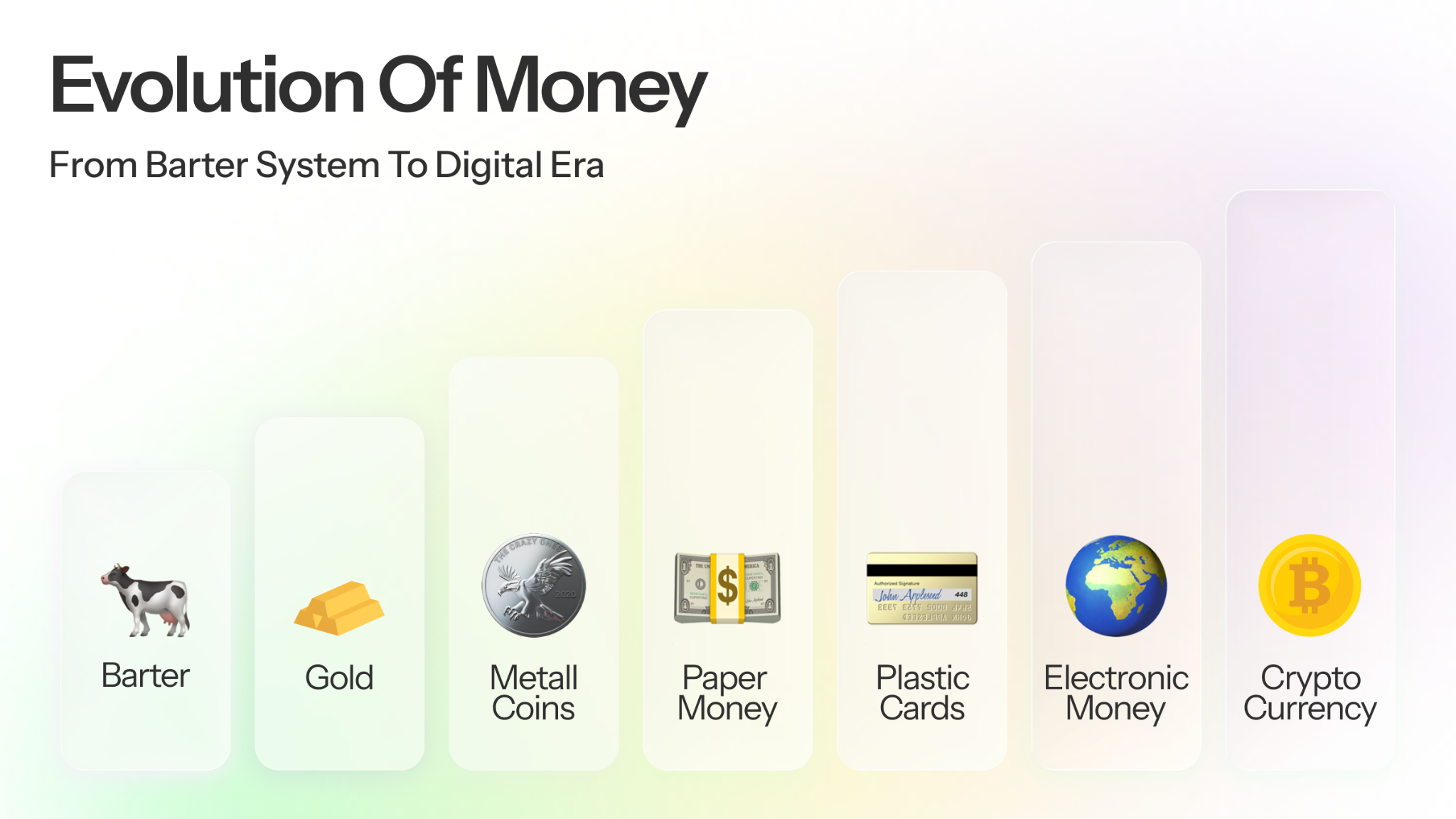
That trust proved fragile. Banking systems promise liquidity while operating on fractional reserves, making them vulnerable to stress. During periods of uncertainty, access to deposits can be restricted, settlement delayed, and confidence tested. Digital banking improved speed, but not finality. Value still moved through intermediaries, clearing cycles, and jurisdictional boundaries.

Argentina experienced a major bank run and financial crisis in late 2001, leading to the infamous “Corralito” (bank deposit freeze) that limited withdrawals to $250/week, sparking riots, government collapse, and currency devaluation
Blockchain introduced a different settlement model. Value could move peer-to-peer with finality enforced by code rather than institutions. Early cryptocurrencies demonstrated this shift, but price volatility limited their usefulness for everyday transactions.
Stablecoins addressed that gap. By anchoring blockchain-based assets to fiat units of account, they combined digital settlement with price stability. Adoption followed where traditional systems were slow, restrictive, or unreliable.
Stablecoins did not replace fiat. They extended it beyond the constraints of legacy financial rails.
The Drivers of Stablecoin Growth
Stablecoin market capitalization has expanded rapidly as demand for efficient dollar settlement outpaced traditional financial rails. Cross-border trade, digital services, and remote work increased the need for fast, predictable value transfer, while banking systems remained fragmented by jurisdiction, cost, and delay.
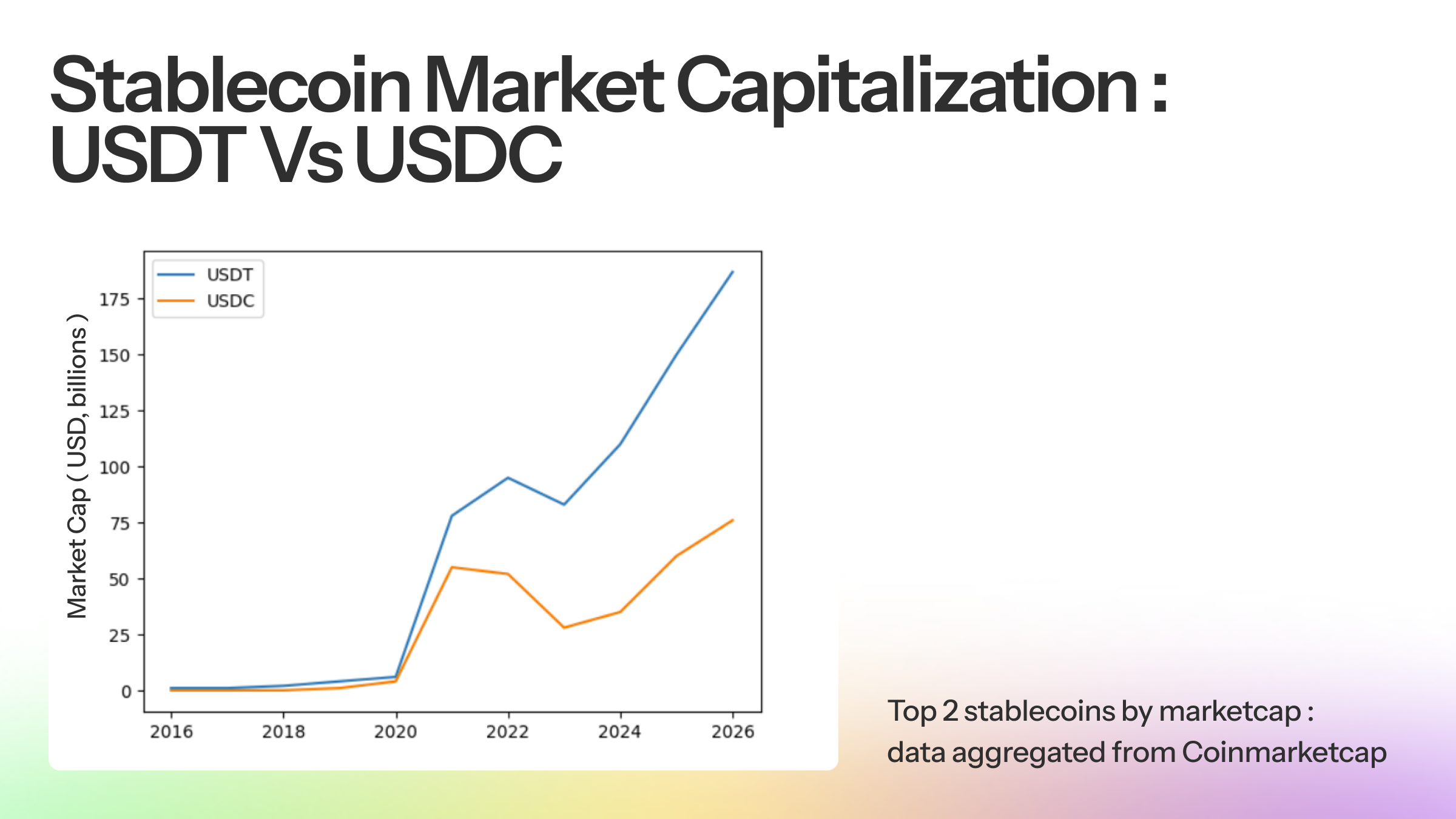
Stablecoins filled this gap by enabling dollar-denominated settlement without correspondent banking. In doing so, they effectively globalized access to dollar liquidity, allowing trade, payments, and value transfer to operate across borders with fewer structural constraints.
This shift has been most visible in cross-border commerce and remittances, where stablecoins enable near-instant settlement and reduce reliance on fragmented banking networks. For businesses and individuals operating across jurisdictions, this means faster payments, lower FX and intermediary costs, and predictable settlement regardless of local banking hours or access.
Beyond trade, stablecoins are increasingly used for payroll, peer-to-peer transfers, and everyday merchant payments, particularly in markets where local currencies are volatile or digital banking penetration is uneven. According to Yellow Card, much of this adoption is driven by practical needs such as remittances, small business payments, and access to dollar-denominated savings.
— Onchain Foundation (@OnchainHQ) October 13, 2025
Rather than trading or speculation, stablecoin adoption has been driven by practical financial needs. As stablecoins move into day-to-day economic activity, their role becomes visible through a clear set of operational use cases where traditional financial rails introduce cost, delay, or access constraints.
Key use cases include:
- Cross-border payments and trade settlement
Near-instant, dollar-denominated settlement across jurisdictions without correspondent banking, reducing delays and intermediary costs. - Treasury and working capital management
Holding and moving USD liquidity globally, managing cash positions in real time, and streamlining B2B payments. - Payroll and contractor payouts
Fast, predictable payments for global teams and gig platforms without reliance on local banking infrastructure or FX-heavy rails. - Remittances and peer-to-peer transfers
Low-cost, high-speed transfers, particularly in regions where traditional remittance channels remain slow or expensive. - Merchant and e-commerce payments
Instant settlement, 24/7 availability, and reduced FX exposure for merchants operating across borders. - On-chain financial services
Base settlement asset for lending, borrowing, and programmable cash flows in decentralized financial systems. - Access to global digital goods and services
Purchasing SaaS tools, advertising platforms, app store credits, and payment services that are often inaccessible through local cards or restrictive banking intermediaries.
Shifting Tides Across Currencies
While USD-backed stablecoins dominate today, the same shift is beginning to appear in non-dollar stablecoins. Euro- and regionally backed stablecoins are increasingly used for domestic and regional settlement where local currency rails are inefficient. As recent data highlighted by Token Terminal shows, growth in stablecoin usage is broadening beyond the dollar, reinforcing that the underlying trend is about operational efficiency, not denomination. Stablecoins, regardless of currency, are increasingly adopted first as working cash rather than investment instruments.
This pattern is especially visible across emerging markets, where local payment infrastructure has not kept pace with the speed of digital commerce. In regions such as Southeast Asia, locally denominated stablecoins are enabling businesses to settle transactions, manage liquidity, and pay counterparties in familiar currencies while bypassing fragmented or costly banking rails. Initiatives like IDRX, supported through the Lisk EMpower Fund, reflect a broader shift toward regionally relevant financial infrastructure. Rather than replacing the dollar, these stablecoins complement it, extending the same operational advantages into local economies where efficiency gains are often most immediate and most needed.
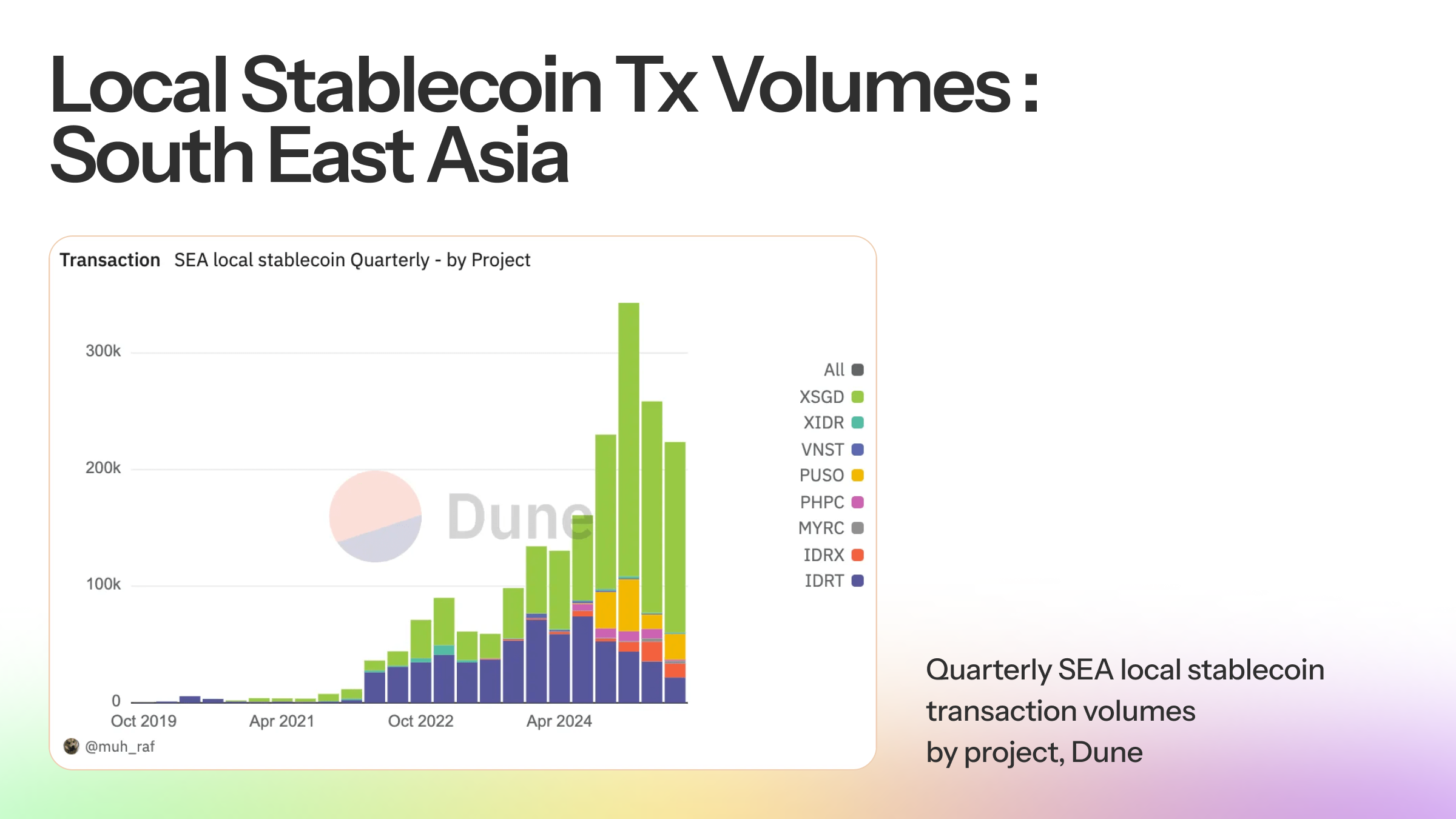
Source: Dune Analytics
2026: the year non-USD stablecoins take off? https://t.co/alNZi6hxoM pic.twitter.com/4hZRitLsu4
— Token Terminal 📊 (@tokenterminal) January 13, 2026
Institutions Are Replacing Cash, Not Experimenting
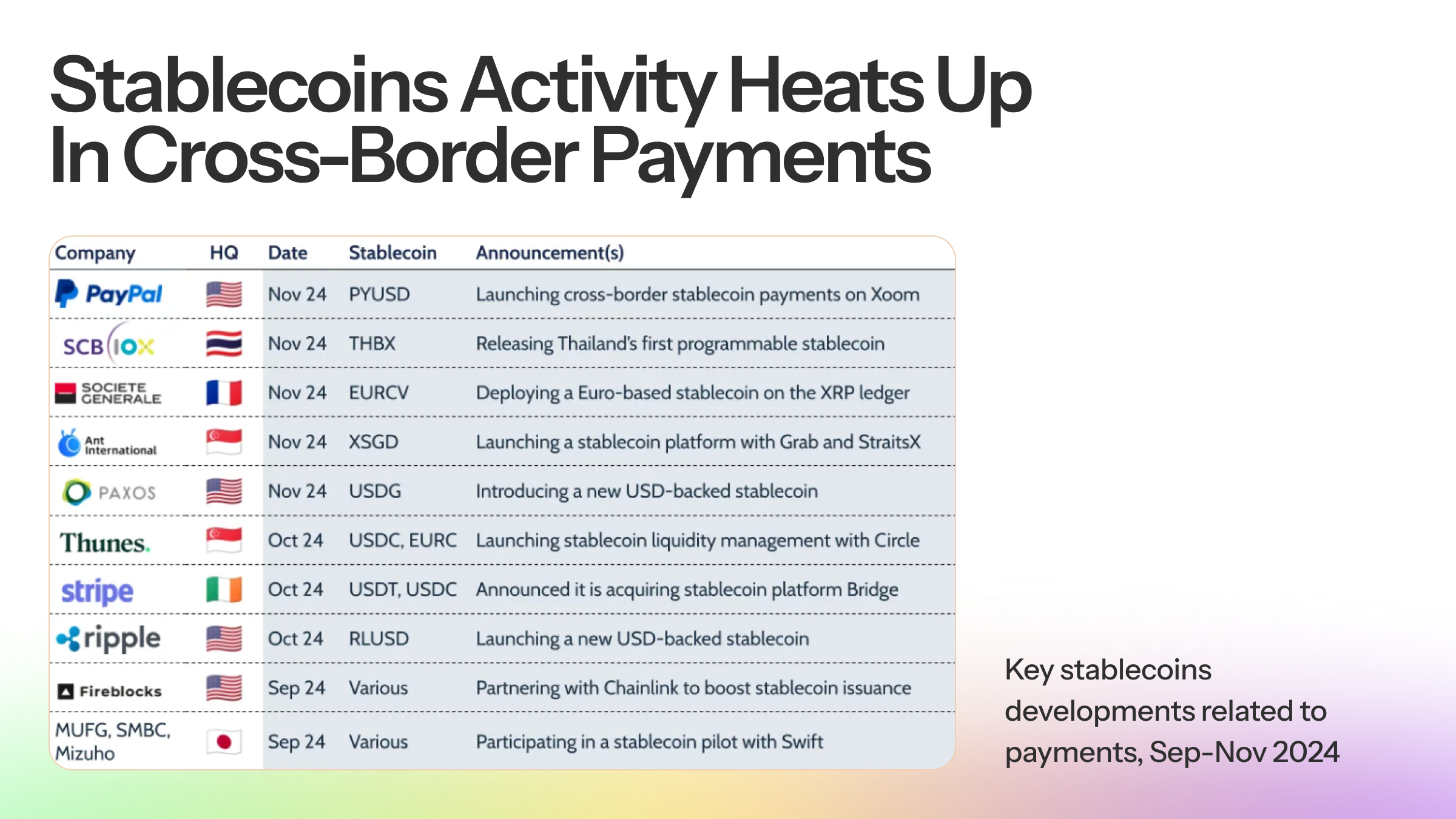
What stands out in the recent wave of institutional activity is not experimentation, but substitution. Payment companies, banks, and financial infrastructure providers are not adopting stablecoins as a new asset class, but as a new form of cash. Where cash balances and bank deposits once powered payments inside closed systems, stablecoins are increasingly taking that role in digital and cross-border contexts. When a platform like PayPal extends stablecoins into its existing payment rails, or banks issue their own tokenized equivalents, it signals that stablecoins are being treated as operating money: liquid, low-volatility instruments designed for settlement, treasury movement, and day-to-day financial operations. Rather than changing what money represents, institutions are changing how it moves. Stablecoins mirror the role cash has always played, while removing the constraints that made cash and traditional deposits inefficient at global scale.
When Better Cash Arrives Silently
A similar shift is already visible at the interface layer. Neobanks and fintech platforms increasingly abstract away the mechanics of money movement, much like ATMs once did for physical cash. Services such as Kast illustrate how far this abstraction has progressed. Stablecoins can be spent directly from wallets for everyday purchases and make ATM withdrawals in currency of your choice.
Users never needed to understand how interbank clearing worked to withdraw money; they only needed the interface to work reliably. Stablecoins follow the same pattern. Through account abstraction and embedded wallets, users interact with balances, payments, and transfers without needing to understand blockchains, keys, or settlement logic.
In this sense, stablecoins are quietly replacing cash and deposits with a more efficient equivalent. As Gresham’s Law suggests, when a form of money performs the same function with less friction, it tends to displace inferior alternatives in day-to-day use. The transition is not ideological or explicit. It happens silently, as better cash moves to the foreground and legacy mechanisms fade into the background.
Where It All Comes Together
With a new form of cash now in circulation, one that is borderless, transparent, and programmable, the limits of existing financial infrastructure are becoming increasingly visible. Global work and digital commerce operate in real time, yet payments often do not. A developer in India may still wait several business days to get paid from his remote work in the United States, while recipients across Sub-Saharan Africa can lose a meaningful share of value to remittance fees (up to 10%). Legacy systems such as SWIFT were not designed for this level of global, high-frequency economic activity. They remain slow, costly, and prone to friction, from intermediary delays to false compliance flags.
Today, many Web3-native companies already bypass these legacy rails by operating directly with stablecoins for treasury, payroll, and cross-border payments. Yet doing so introduces a different set of operational challenges. Day-to-day flows often span personal and business wallets, decentralized liquidity venues, centralized exchanges, and traditional payment endpoints. Moving value between these layers can require multiple hops, with associated fees, slippage, and liquidity constraints, while reconciliation, reporting, and compliance are handled separately rather than embedded into the flow. What emerges is not a lack of access to modern money, but a lack of operational coordination. As stablecoins increasingly function as working capital rather than an alternative payment method, the challenge shifts from moving funds to orchestrating them across systems that were never designed to work together, pointing to the need for a unified operational layer that connects onchain liquidity with real-world financial workflows.
When cryptocurrencies first entered the mainstream, they carried the promise of a radically new financial system: permissionless, global, and always on. That vision of 24/7 finance remains compelling, but its realization has proven incremental rather than immediate. Financial systems are deeply embedded in law, institutions, and everyday behavior, and meaningful change tends to arrive by working within existing frameworks before reshaping them. History supports this pace. The transition from barter to commodity money unfolded over centuries, and the shift from commodity-backed money to fiat took decades more. Against that backdrop, stablecoins represent a pragmatic step forward. They bridge legacy finance and programmable money, allowing new infrastructure to emerge without requiring the world to abandon familiar monetary foundations overnight.
Stablecoins are no longer a future construct. They are already widely adopted, embedded in payments, trade, treasury, and consumer finance, with major institutions integrating them as a natural extension of existing financial services. Measured against the core functions of cash, the case is straightforward. Stablecoins are increasingly accepted as a medium of exchange for payments and settlement, they are denominated in familiar units of account, and they serve as a store of value over short and medium time horizons in contexts where traditional alternatives fall short. In that sense, stablecoins are not an experiment running alongside the financial system. They are already operating cash, and as infrastructure, regulation, and interfaces continue to mature, their role as the default form of digital cash is likely to become even more pronounced.